


How to Reduce Noise in Cubicles & Reclaim Office Focus
Posted by Kate Murphy on May 13th 2026
It often starts with just a few distractions—a conversation nearby, a phone ringing, someone walking past. But over time, those sounds add up, creating constant interruptions that disrupt focus and make it harder to get meaningful work done.
And the data backs it up. Open layouts can increase stress, reduce focus, and lower overall job satisfaction. And further research shows that 69% of employees report noise negatively impacts their concentration, productivity, and creativity.
However, office noise isn’t something you have to accept. With the right approach, you can significantly reduce distractions and create a more focused, comfortable work environment, even in busy cubicle layouts.
The Science Behind Sound: Absorption vs. Blocking
To effectively reduce noise, it helps to understand how sound behaves in a space. Most cubicle solutions rely on two key strategies: absorption and blocking.
Absorption
Sound absorption works by using soft, porous materials, like acoustic fabric or felt, to capture sound waves. Instead of bouncing around the room, sound is absorbed or muffled into the material.
This matters more than most people realize. In open offices, sound bounces off hard surfaces like glass, drywall, and ceilings, creating a constant buildup of ambient noise. Absorption helps eliminate that echo effect, lowering overall noise levels and making the environment feel calmer and more controlled.
Blocking
While absorption controls echo, blocking stops sound from moving between spaces.
Blocking requires a physical barrier, such as a wall or an air-tight, high-density panel system, that prevents sound vibrations from passing through.
This is especially important for speech privacy. This matters because the human brain is wired to process speech automatically. Even when you try to ignore it, nearby conversations compete for your attention, making it harder to focus and increasing mental fatigue.
Other Solutions: Diffusion and Masking
Beyond absorption and blocking, two additional strategies can help improve office acoustics.
Diffusion works by scattering sound waves using textured or uneven surfaces. Instead of sound bouncing directly off a flat wall and echoing across the office, a surface like a slatted wood panel disrupts the sound and disperses it in multiple directions.
Sound masking takes a different approach by introducing low-level background noise, such as soft airflow or a gentle hum, to make conversations less noticeable. While it doesn’t reduce noise directly, it helps minimize distraction.
3 Versare Multi-Product Solutions to Dampen Cubicle Noise
Reducing office noise isn’t about one product. It’s about layering solutions based on your space and needs.
1: Reducing Distractions in the Surrounding Workstation
For individual focus, the goal is to control noise and visual distractions within the immediate workspace.
Hush Panel™ Cubicles create defined, sound-dampening environments without permanent construction. Their acoustic cores absorb sound while providing visual privacy and boundaries. 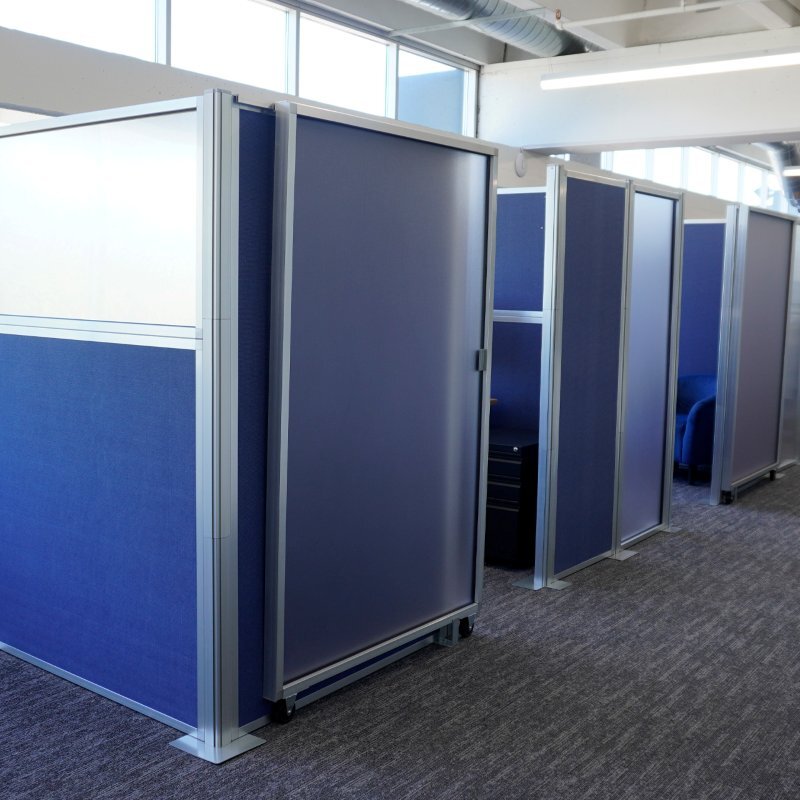
To further enhance focus, the Hush Panel™ Cubicle Sliding Door can be added to create a more enclosed workspace. By limiting pass-through noise and visual distractions at the entry point, it helps maintain concentration, especially in high-traffic areas.
Desktop privacy panels can also be added directly to the desk, reducing noise at seated height and limiting distractions from nearby conversations, while wall-mounted acoustic panels help reduce sound reflection.
Workplace example: In a customer support team, where employees are constantly on calls, these solutions can reduce echo and improve speech clarity—making conversations easier to hear and less stressful.
2: Reducing Overall Noise in Open Office Floorplan
In larger offices, noise builds across the entire space—not just at individual desks.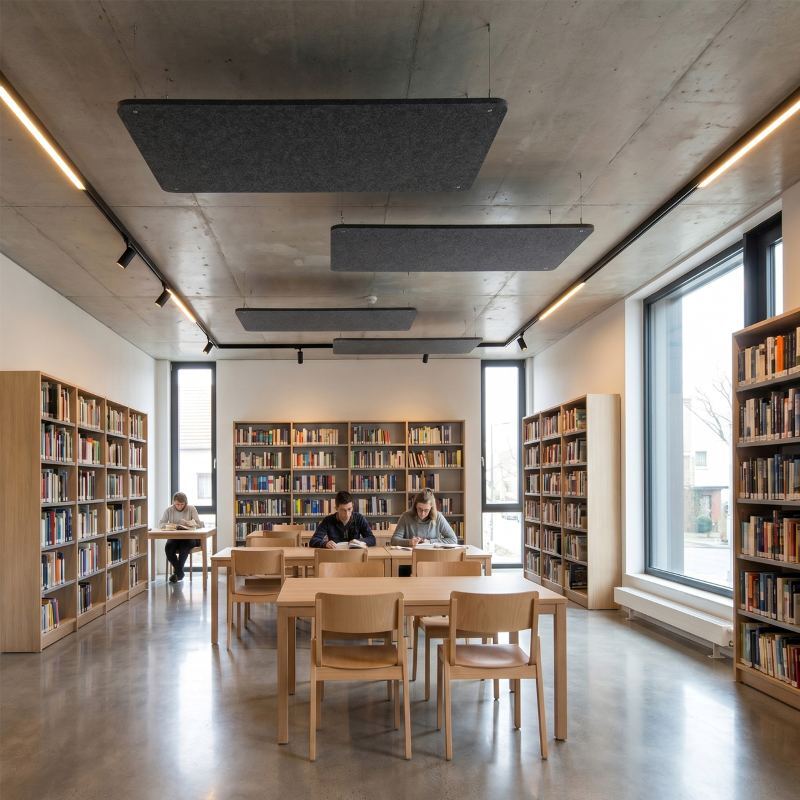
Recommended background noise levels for offices are 35-45 decibels to support clear communication, minimize distractions, and improve employee well-being. In contrast, large open-plan offices often reach 60-70 decibels during busy periods. SoundSorb™ ceiling panels help absorb sound vertically, preventing noise from bouncing off ceilings and spreading across the office. To further reinforce this, high-density, wall-mounted panels can be placed along walls or near high-traffic areas to absorb ambient sound.
For flexible zoning, the Room Divider 360® can be used to create temporary quiet areas or separate departments. Its ability to form curved or enclosed layouts helps contain noise at its source, and it’s available in acoustic SoundSorb™ material.
Workplace example: In a collaborative marketing department, these solutions reduce overall noise levels while still allowing teamwork—so one group’s conversation doesn’t disrupt the entire floor.
3: Creating Flexible, Portable Sound Barriers
Some environments need adaptable solutions, especially when layouts change frequently or construction isn’t practical. 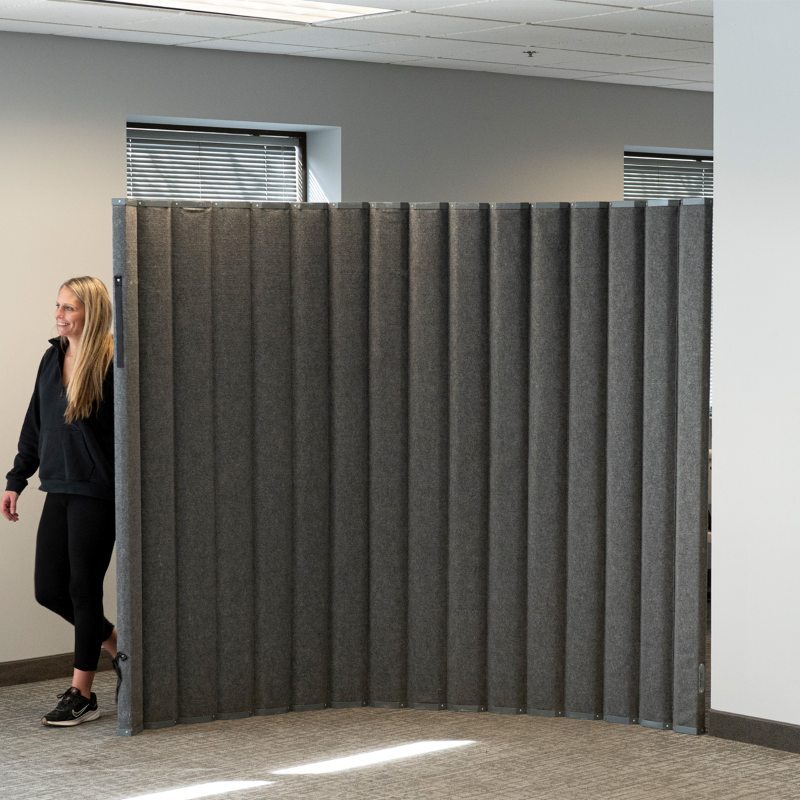
VersaPanel™ and VersiFold™ acoustical walls provide strong sound absorption and can be quickly deployed to create quieter zones or separate high-noise areas, while Hush Screen™ Portable Partitions add mobile flexibility, allowing teams to easily divide spaces or shield workstations from distractions.
For more durable setups, EverPanel® wall kits and rooms provide semi-permanent solutions that block and reduce persistent noise while still allowing future reconfiguration.
Workplace example: In a hybrid office or coworking spaces, portable acoustic walls allow managers to adjust layouts weekly. EverPanel® systems can be used to create private phone pods or small meeting rooms for focused work.
Reclaiming Your Offices Acoustic Environment
Office noise isn’t just an annoyance—it’s a measurable barrier to productivity, communication, and employee well-being.
The most effective solution isn’t a single product. Effective acoustic control comes from a layered approach that integrates absorption, blocking, and adaptable dividers. Together, these strategies transform cubicle environments from distracting and noisy into focused, productive workspaces.
Explore Versare’s full range of acoustic panels, modular cubicles, and portable office partitions, or reach out to our team to find the right combination for your space.