

How Thick Should Your Acoustic Panels Be? What Matters Beyond Thickness
Posted by Kate Murphy on Nov 4th 2026
Your conference room shouldn’t add its own commentary to the meeting. But when voices bounce off hard surfaces, lingering sound can make conversations harder to follow and send you searching for acoustic panels.
You’ll often hear thicker is better. There’s some truth to that, especially when lower-frequency sound is the concern. But thickness alone doesn’t tell you which panel will work well in your space.
The right choice also depends on the panel material, where you place it, and how it’s installed. Here’s how to look beyond thickness and focus on what your room needs.
How Does Acoustic Panel Thickness Affect Performance?
Hard surfaces, like walls, windows, and floors, cause sound to bounce around a room. Acoustic panels absorb some of that sound, reducing echo and reverberation—the sound that lingers after someone stops speaking. This can make conversations easier to follow and shared spaces more comfortable, but it won’t stop sound from traveling through walls or guarantee speech privacy.
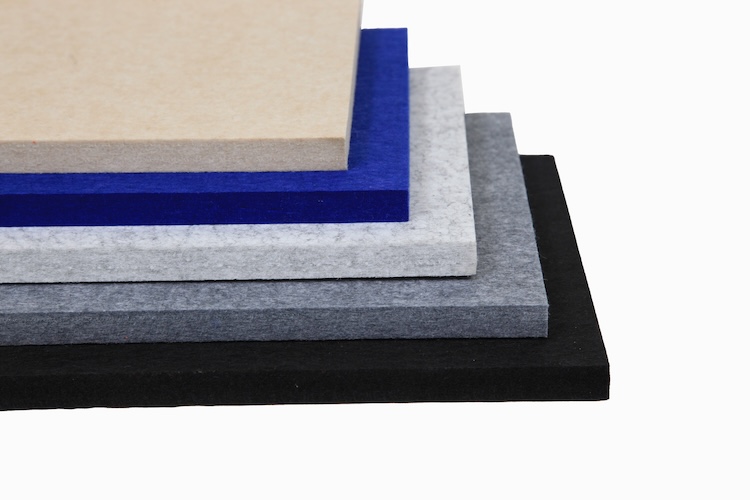
Slim acoustic panels can help reduce sound reflections that make conversations harder to follow, while thicker panels can provide added absorption for deeper sounds, such as bass. Finding the right fit means looking at what a panel is made of, how well it absorbs sound, and where you’ll place it—not just its thickness.
The Noise Reduction Coefficient (NRC) measures how well a material absorbs sound during testing. Higher ratings generally indicate greater sound absorption. It’s a useful guide for comparing panels, though the results in your room will also depend on the space and how the panels are installed.
Are Thicker Acoustic Panels Always Better?
Thicker panels can offer broader absorption, but they also tend to cost more and extend farther from the wall. That added depth might be worthwhile for music production, for example, but offering less practical value in a small meeting room focused on conversation. Consider a home office where your voice sounds hollow during calls. Slim acoustic panels placed on nearby walls may help reduce those reflections without taking up much space.
Basically, choose panels and placement based on what you’re hearing. Once conversations sound clearer, thicker panels or additional coverage may not make a noticeable difference in how you use the room each day.
When Slim Acoustic Panels Make Sense
Slim panels are worth considering when the main concern is speech, chatter, or echoes caused by sound bouncing between hard surfaces.
They also suit rooms where floor space is limited or treatment needs to complement the decor. Wall-mounted shapes can become part of a design, while desktop and freestanding panels introduce absorption around existing furnishings. (More on that further down!)
Here are a few spaces where slim acoustic panels can help and what they can do in each:
- Home Offices: Reducing echo to help your voice sound clearer during video calls.
- Classrooms and Educational Spaces: Making lessons and discussions easier to follow by reducing sound reflections.
- Restaurants and Dining Areas: Helping soften the buildup of reflected conversation in rooms with hard surfaces.
- Huddle Rooms and Conference Rooms: Reducing echo for clearer in-person conversations and video meetings.
- Open-Plan Offices: Adding sound absorption near desks and shared work areas to help manage reflected chatter.
- Multipurpose Rooms: Adding absorption to spaces used for meetings, classes, and group activities.
When Deeper Acoustic Treatment Is Needed
Extra-thick panels are not automatically necessary in everyday commercial or residential spaces. Start with the acoustic problem rather than a minimum thickness.
Recording studios, home theaters, and music rooms can benefit from panels thicker than 1 inch, particularly when lower-frequency sound needs attention. Substantial bass problems may require much deeper treatment or dedicated bass traps. Loudness alone does not determine the necessary depth; the sound’s frequency content matters.
For example, thin panels might reduce sharp reflections in a music room while leaving a lingering bass note untreated. Slim panels and deeper absorbers can work together, with each addressing different parts of the problem.
What to Compare Beyond Thickness
To find the right acoustic panels for your space, consider how performance, installation, and room layout work together.
NRC Rating
Compare tested absorption figures alongside panel depth. For music or persistent low-frequency problems, review frequency-specific results as well. Check that the tested mounting arrangement matches your planned installation.
Material and Density
PET material, felt, fiberglass, and foam perform differently. Density influences how sound interacts with a material, but greater density does not automatically mean better absorption. Evaluate the complete product and its test data.
Mounting and Air Gaps
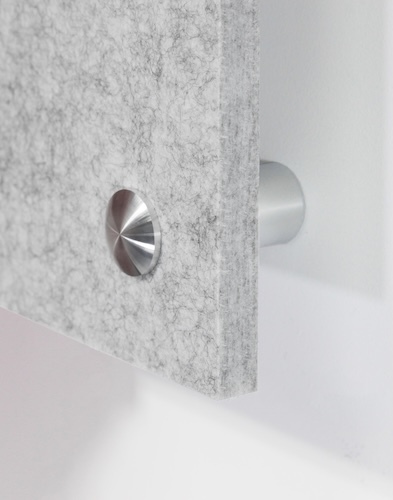
How you install a panel can affect how well it absorbs sound. Leaving an air gap between a porous panel and the wall can improve absorption at some lower frequencies. Freestanding panels can absorb sound from both sides when both faces are exposed, though this doesn’t mean they absorb twice as much. For the best results, follow the manufacturer’s mounting instructions.
Coverage and Placement
How much surface area you treat can matter as much as panel depth. Position absorption where significant reflections occur, such as bare walls near meeting tables or ceilings above activity areas. See our acoustic panel placement guide for practical starting points.
Room Size and Shape
Large rooms with extensive hard surfaces generally require more total absorption. Parallel walls can encourage flutter echo, while irregular layouts create different reflection paths. Consider the room’s furnishings and typical occupancy, too.
Practical Factors
Compare footprint, mobility, aesthetics, fire ratings, and budget. A movable divider might suit a changing classroom layout, while ceiling treatment preserves wall space needed for windows or displays.
Where SoundSorb™ Fits
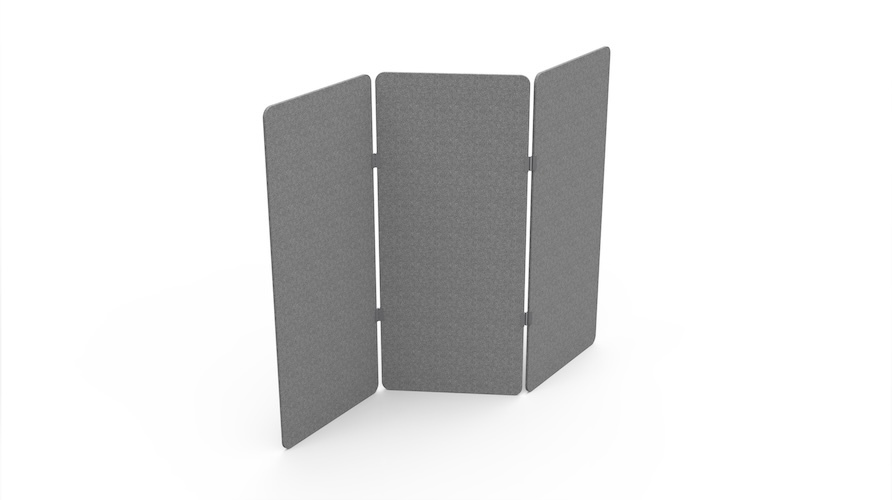
Versare’s SoundSorb™ acoustic panels measure 17mm thick, approximately 0.67 inches, with an NRC rating of 0.50. Their slim PET construction offers a practical way to help control speech reflections while coordinating treatment across walls, desks, and shared areas.
Freestanding Panels
Freestanding acoustic panels add absorption and define activity areas without attaching to walls. They’re useful for shared offices, classrooms, and multipurpose rooms where layouts change. The SoundSorb™ Acoustic Panel Kit includes a foot stand for freestanding use and hardware for other mounting arrangements. Multiple panels can connect with clip-on hinges, making it useful for defining activity areas as layouts change.
Wall-Mounted Panels
Wall-mounted acoustic panels help control reflections without taking up floor space. Arrange them around meeting areas or across bare walls to combine sound absorption with visual interest. For example, SoundSorb™ Acoustic Rectangles and Acoustic Standoff Panels are just two of the many shapes and styles available.
Desktop Panels
Desktop acoustic panels bring absorption closer to individual work areas while adding visual separation between neighboring seats. They’re a practical addition to shared desks, study and testing areas, and open offices. SoundSorb™ Desktop Privacy Panels offer several shapes and colors to complement existing workstations.
Ceiling Panels
Ceiling acoustic panels introduce absorption overhead, preserving wall space for windows, displays, or equipment. SoundSorb™ Acoustic Ceiling Tiles fit standard drop ceiling grids, while Acoustic Canopy Panels offer a suspended option for open areas.
Better Acoustics Start with the Right Fit
The right acoustic treatment helps people hear, focus, and work more comfortably. Look beyond thickness to choose panels suited to your room’s sound, layout, and daily activities.
Explore Versare’s acoustic solutions or connect with our team to plan treatment for your space.