


The Science of Peace and Quiet: Do Acoustic Panels Really Work?
Posted by Kate Murphy on Oct 14th 2026
To put it simply: Yes, acoustic panels really do work. You’ll notice the difference in what you hear less of: lingering echoes, muddled conversations, and noise bouncing around the room. Acoustic panels absorb sound reflections before they bounce back into the space, reducing reverberation and noise buildup. With the right type, coverage, and placement, they can make a room feel noticeably calmer and help conversations, meetings, and lessons come through more clearly.
Better acoustics do more than make a room easier on the ears. They can make it easier on the brain. In a 2023 study of simulated open-plan offices, participants performed better on a short-term memory task when reverberation time was reduced to 0.4 seconds, compared with 0.8 or 1.1 seconds. The takeaway: When less sound lingers, the brain has less competing noise to sort through.
Acoustic panels are designed for sound absorption, not complete soundproofing. They improve how sound behaves within a room rather than blocking all noise from entering or leaving. To help you know what to expect, we’ll explain how acoustic panels work, what affects their performance, and how to choose and place the right type for your space.
Acoustic Panels Improve Sound Quality
Sound travels through a room as waves. When those waves reach hard surfaces such as glass, drywall, concrete, tile, or an exposed ceiling, much of the sound reflects back into the space. Those reflections can overlap with the original sound and with one another, making a room feel louder, harsher, or harder to follow.
Acoustic panels use porous or fibrous materials to capture part of that sound energy. As sound enters the material, friction within its structure converts some of the energy into heat instead of sending it back into the room. This process can improve room acoustics in several ways:
- Less echo. Repeated sounds, such as voices or claps, become less noticeable.
- Shorter reverberation. Sound fades faster instead of lingering after the source has stopped.
- Clearer speech. Fewer overlapping reflections make words easier to understand during conversations, lessons, and presentations.
- Less ambient buildup. Everyday sounds remain, but less reflected sound continues circulating through the room.
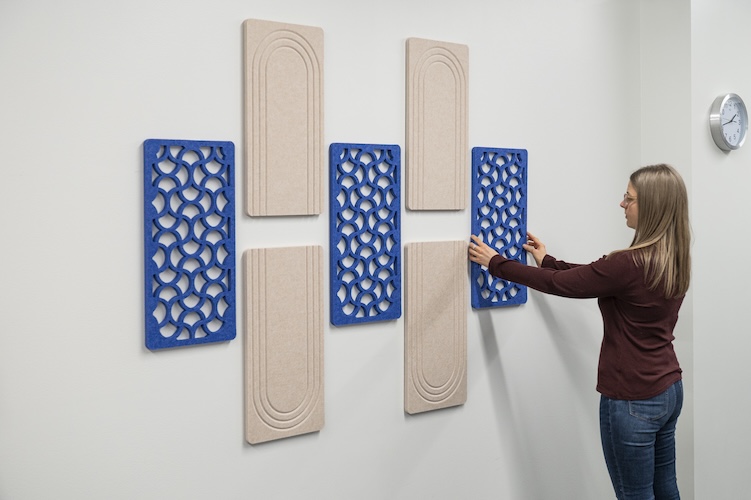
That can have a practical impact across many settings. In a conference room, reduced reverberation can improve speech clarity for people at the table and on video calls. In an open office, panels can soften surrounding conversations and routine activity so employees can focus more easily. In classrooms, clearer speech can help students hear instructions. Recording, podcasting, and listening spaces can also benefit from fewer reflections that color or blur the sound.
For a closer look at the basics, read “What Do Acoustic Panels Actually Do?”
Acoustic Panels Absorb Sound; They Are Not Completely Soundproof
Sound absorption and soundproofing solve different problems. Acoustic panels absorb reflected sound within a room. Soundproofing is intended to reduce sound transmission from one room or area to another, often through added mass, sealed gaps, isolated construction, or a combination of methods.
For that reason, acoustic panels have clear limits:
- They do not make a room silent. Voices, equipment, traffic, and other original noise sources remain somewhat audible.
- They do not stop all sound transmission. Noise can still pass through walls, doors, windows, ceilings, floors, and unsealed openings.
- They are not a universal fix for low frequencies. Bass and mechanical rumble have longer wavelengths and may require thicker, specialized treatment or changes to the source.
If the main concern is privacy between rooms or noise entering from an adjacent space, acoustic panels may be only one part of the solution. But when the problem is echo, reverberation, poor speech clarity, or an overly lively room, sound-absorbing panels can make a meaningful difference.
How Much Do Acoustic Panels Actually Help?
One of the most useful performance measures is the Noise Reduction Coefficient, or NRC, which rates (on a scale of 0 to 1.0) how effectively a material absorbs sound across a standard range of frequencies. A higher NRC indicates greater sound absorption, but it does not measure soundproofing or guarantee the same results in every space.
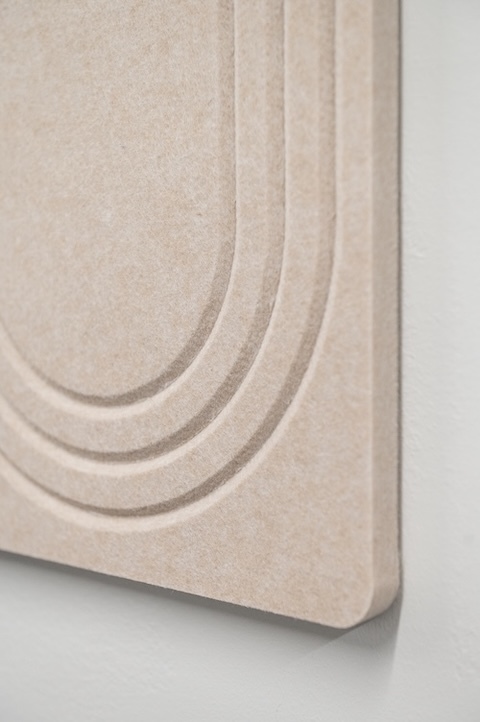
SoundSorb™ material and Versare products made with SoundSorb™ panels have an NRC rating of 0.50. However, NRC is only one part of acoustic performance. The overall result also depends on:
- Coverage. Large, reflective rooms generally need more treated surface area than smaller spaces with carpet and upholstered furniture.
- Panel thickness. Thicker materials may absorb a broader range of frequencies, although material and installation also affect performance.
- Placement. Panels are most effective when positioned near key reflection points and distributed throughout the space.
- Room conditions. Room size, ceiling height, layout, furnishings, and hard surfaces all influence the result.
- Sound frequency. Many acoustic panels perform best with speech-range and higher-frequency sounds, while lower frequencies may require additional treatment.
Acoustic treatment works as a system: several well-placed panels typically perform better than one panel in a large room. For complex spaces, an acoustic professional can assess reverberation, noise sources, and coverage needs.
How to Choose and Place Acoustic Panels

The best panel type and placement depend on where sound reflects, which surfaces are available, and how the room is used. Start with large hard surfaces and first-reflection areas, where sound bounces from a source toward listeners. Then choose a format that fits the space:
- Wall-mounted panels: Treat broad, open walls without using valuable floor space. These panels work well in offices, conference rooms, classrooms, studios, and reception areas.
- Ceiling panels or baffles: Use overhead space in open rooms, areas with high or exposed ceilings, and spaces where walls are unavailable or already occupied.
- Freestanding acoustic panels: Add sound absorption and visual separation between workstations or around meeting areas, then reposition the panels as the layout changes.
- Desktop dividers: Absorb some nearby sound while creating a more defined individual workspace.
For more detailed guidance, see “Where to Place Acoustic Panels for Maximum Sound Control.”
Bring Better Sound to Your Space with Versare Acoustic Panels
So, do acoustic panels work? Yes, when they are matched to the room and the problem. They can reduce echo, shorten reverberation, improve speech clarity, and make busy spaces feel more comfortable. The key is to set the right goal, compare NRC ratings, provide enough coverage, and place each panel where it can address significant sound reflections.
Ready to improve the way your space sounds? Browse Versare acoustic panels and room dividers to find wall-mounted, ceiling, freestanding, and desktop solutions for your environment.