


How to Make the Best Small Living Space: Versatile Ideas
Posted by Kate Murphy on Sep 23rd 2026
When square footage is limited, every corner must pull its weight. So, how do you make the best small living space? The trick is to decide what your home needs to do, then make it easy to shift from one activity to the next. Clear zones, hardworking furniture, open walking paths, plenty of light, and flexible dividers can help a small abode feel comfortable instead of crowded.
Think of your space less as one room with one job and more as a room that can change with the day. A corner can be a home office until 5 p.m., a living area can make room for a workout, and a divider can give overnight guests a little privacy. With smart storage, modular furniture, and movable boundaries, you can make the most of the square footage you have without trying to cram an entire house into it.
Start with What Your Small Space Needs to Do
Before you start rearranging furniture or filling an online shopping cart, take a step back and think about how you use your home. A small space works best when it is planned around your daily activities, not a checklist of rooms you think you are supposed to have.
List everything the space needs to support, such as sleeping, relaxing, working, dining, studying, exercising, children’s play, storage, or hosting guests. Then consider which activities need a permanent place and which only require space at certain times.
A bed may need a dedicated footprint every day. A desk, dining surface, or exercise area may not. A 500-square-foot apartment, for example, does not necessarily need a permanent office. It may need a focused workspace for eight hours and comfortable living space for the rest of the day. Thinking in terms of activities makes it easier to create a layout that fits your real routine.
Once you know what the space needs to do, measure the room and note its doors, windows, outlets, radiators, and walking paths. This helps you avoid blocking light or movement and decide which pieces should stay put, fold, roll, stack, or move.
Create Zones Instead of Trying to Create More Square Footage
Defined zones bring order to the room and make it easier to shift from one part of the day to another.
Use Furniture Placement to Define Different Areas
Begin with furniture placement. A sofa can mark the edge of a living area, while a rug can visually gather a seating group. An open shelf can separate two zones while still allowing light to pass through. A narrow console or low cabinet can define a work area and add storage. Furniture does not always need to sit against a wall; sometimes turning a piece perpendicular to the wall creates a more useful boundary.
Use a Room Divider When Furniture Alone Isn’t Enough
When furniture alone does not provide enough separation, add a room divider. A portable partition can screen a bed in a studio apartment, create a home office in a living room, conceal storage, separate a play area, or provide temporary privacy for a guest. Because the divider can move, the room can open again when the extra zone is no longer needed.
Also, keep walkways and sightlines open, and avoid blocking the room’s only source of daylight with a tall, opaque divider. A shorter, translucent, or partially open option can define the zone without closing in the room.
Choose Modular Furniture That Earns Its Footprint
In a compact home, every large item should justify the floor space it uses. The most useful pieces usually do at least one of the following jobs.
- Serve more than one purpose: Look for storage ottomans, sleeper sofas, benches with concealed storage, expandable tables, and desks that can also work as consoles. A dining table with a drop leaf, for example, can stay compacted for most days and expand when guests arrive.
- Move or reconfigure easily: Rolling carts, nesting tables, lightweight chairs, modular seating, and movable dividers let you reset a room without a major effort. If an item changes jobs often, make sure it is easy enough to move that you will actually use that flexibility.
- Use overlooked space: Tall shelving, wall-mounted storage, corner furniture, under-bed drawers, and cabinets that reach upward can add capacity without taking much more floor area. Keep frequently used items within easy reach and reserve higher storage for seasonal or occasional items.
Match the Divider to Your Needs
Choose a divider based on what you need it to do, whether that is adding privacy, defining a zone, reducing distractions, or creating a more room-like space. Consider how often the layout will change and how much separation you want.
Portable or Folding Room Dividers
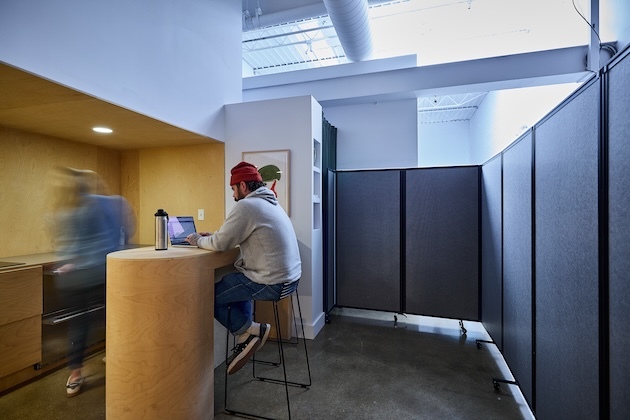
These work well when the layout changes often. Use one to set up a temporary office, exercise zone, play area, study nook, or guest space, then fold or roll it aside when you want the room open. Versare portable room dividers include movable, folding, and accordion-style formats for spaces that need to adapt quickly.
Straight-Style Partitions
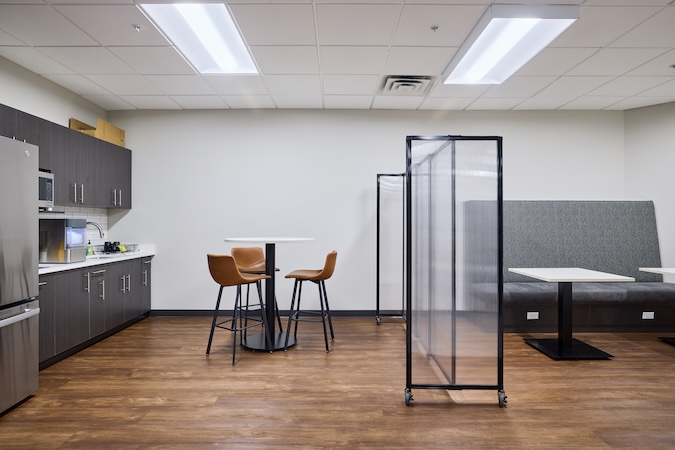
Straight-line partitions, like StraightWall®, use telescoping hinges that let the panels slide and overlap while staying in a straight line. They can separate a studio sleeping area or divide an open living and dining space, then collapse to about a single-panel width for compact storage.
Modular Panel Walls
For more defined, room-like separation, a panel system offers a more substantial boundary than a typical folding screen. EverPanel® systems use large interlocking panels that can be assembled, moved, expanded, or reconfigured as needed. This can be useful when you want to establish a dedicated, professional-looking office or a semi-enclosed zone without treating the project like conventional permanent construction.
Modular Block Walls
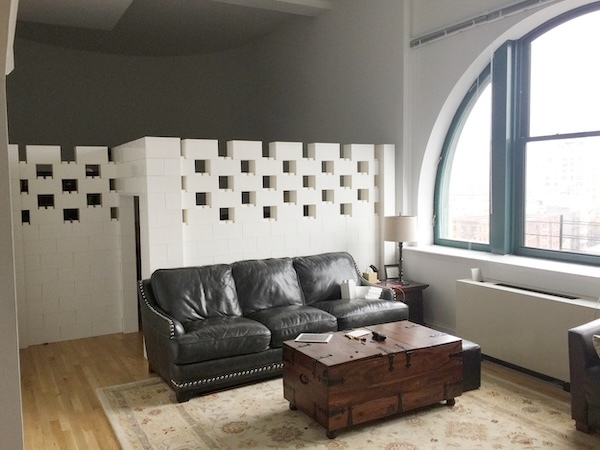
With a durable interlocking block design, EverBlock® modular walls offer the stability and flexibility needed to create private spaces without drywall. The building block system is useful for a shared bedroom, play area, creative layout, or any space that may evolve over time.
Wall-Mounted Dividers
A wall-mounted divider stays connected to one location and expands only when needed. It can be a smart choice when a freestanding divider would take up valuable floor space or when you regularly need to separate the same opening. Because mounting changes the wall, renters should review their lease before installing one.
Build a Small Space That Can Change with You
A small home does not have to perform one function forever. The most effective layouts use intentional zones, furniture that works in more than one way, vertical storage, and movable boundaries so the same square footage can support different routines.
Explore home room dividers and modular walls to find a flexible way to make more of the space you already have.
Still deciding which solution is right for your space? These common questions can help you narrow down your options.
Frequently Asked Questions
How can I divide a small room without building a wall?
Use furniture, shelving, curtains, folding screens, or portable dividers to create a boundary. For more substantial separation, consider a modular wall system. Choose based on your privacy needs, how often the layout changes, and whether wall attachments are allowed.
Do room dividers make a small room look smaller?
They can if they block light, sightlines, or walking paths. Careful placement and an appropriately sized divider can define a zone without making the room feel cramped.
What is the best room divider for a studio apartment?
It depends on your needs. Folding dividers offer flexibility, translucent polycarbonate options preserve light, acoustic partitions help absorb sound, and modular walls provide more substantial separation.
How can I create privacy in a studio apartment?
Place a divider between the bed and living area without blocking windows or entryways. Choose enough height and width to limit the view, and consider acoustic materials if noise is also a concern.
Can you create another room without building permanent walls?
Portable partitions and modular wall systems can create enclosed or semi-enclosed spaces for an office, guest area, or bedroom. Check local requirements and any lease or building restrictions first.
What furniture works best in a small living space?
Choose appropriately scaled pieces that are movable, multifunctional, or include storage. Sleeper sofas, nesting tables, storage benches, modular seating, and expandable tables are all useful options.
How do I create a home office in a small living room?
Choose an underused area and add modular office furniture, such as a compact desk and vertical storage, along with task lighting. Define the workspace with a divider that reduces distractions and helps you close off work after hours.
Are room dividers good for renters?
Yes. Portable and freestanding dividers add privacy without permanent construction and can move with you. Review your lease before drilling, mounting, or making other alterations.
Do room dividers block sound?
Room dividers can help reduce sound, especially when made with fabric or acoustic panels, but they will not soundproof a space. Sound may still travel over, under, or around the partition. For better sound control, choose an acoustic divider sized appropriately for the room, as well as wall-mounted, sound-absorbing panels.