

What is Flex Space and How to Divide It Effectively
Posted by Kate Murphy on Mar 25th 2026
Today, workplaces evolve fast. Teams collaborate differently. Hybrid schedules are the norm. Office occupancy can change dramatically from one day to the next. To keep up, businesses across the commercial real estate landscape are rethinking how their offices are designed, and flex space is emerging as a key solution.
Flex space is exactly what it sounds like: a workspace designed to adapt to different needs throughout the day or week. Instead of dedicating rooms to a single purpose, flex spaces can support collaboration, meetings, training sessions, events, focused work, and more, and all within the same area.
But flexibility alone isn’t enough. Without thoughtful organization, this space can quickly become noisy, confusing, or underused. In this guide, we’ll explore what flex space is, why it matters, and practical strategies for dividing it effectively.
What Is Flex Space?
Flex space is an adaptable area designed to support multiple activities rather than serving a single fixed purpose. Instead of dedicating a room to just one function, flex spaces can shift depending on what teams need at any given time. 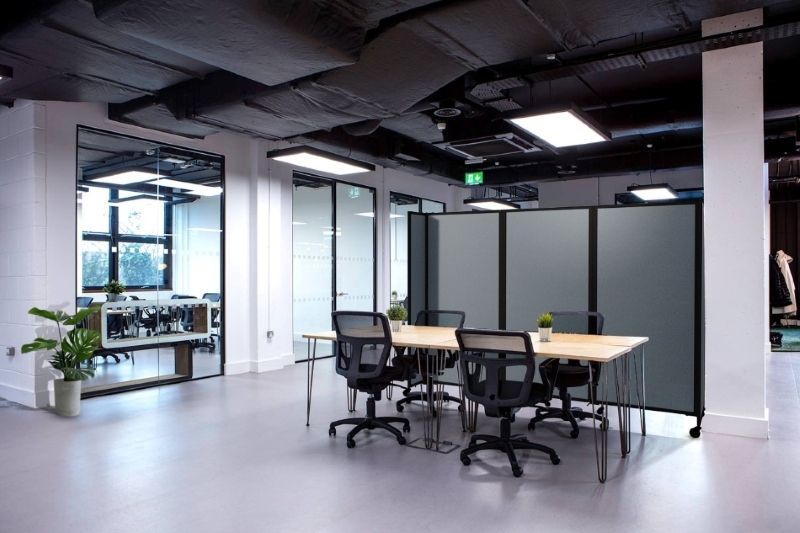
The pandemic pushed many organizations to reevaluate their workplace strategies, and today companies are looking for environments that better support evolving teams, hybrid schedules, and changing workstyles. Flex space has become a popular solution because it offers greater adaptability, cost efficiency, and workplaces that align with modern workforce expectations.
It’s also important to note that flex space isn’t simply an open office layout. It’s intentionally designed for change. Movable furniture, portable partitions, and flexible technology allow the space to be reconfigured quickly as needs shift. For example, the same flex space might host team collaboration in the morning, a training session in the afternoon, and a company meeting or event later in the week.
Common Uses for Flex Space
Because flex space is designed to serve multiple purposes, it can support a wide range of activities within the same physical footprint. In many offices, flex space functions as a collaboration hub where teams gather for brainstorming sessions, project discussions, or informal meetings. Instead of relying solely on traditional conference rooms, organizations can use adaptable areas where groups form and disperse as needed.
Flex spaces are often used for training and learning, with layouts that can easily shift to classroom-style seating for onboarding sessions or professional development workshops. At other times, the same space may serve as a showroom or demonstration area for product displays and presentations. Flex space is ideal for events, allowing large areas to host company meetings, guest speakers, or networking events, and later shift to temporary storage, supply staging, or project preparation.
Because these activities can shift throughout the day or week, dividing flex space effectively is essential for maintaining organization and usability.
How to Divide Flex Space Effectively
Flexibility doesn’t mean a space should be undefined. The goal is to create adaptable zones that support different activities while maintaining clarity, structure, and productivity. Here are seven practical strategies to help divide your flex space.
1. Define Your Core Uses
The first step in organizing flex space is understanding how it will be used most often. Without clear priorities, even flexible layouts can become inefficient or confusing. Consider whether the space will primarily support collaboration, individual work, training sessions, events, or a mix of activities. Identifying these core uses helps determine how the space should be arranged and which zones should take priority.
For example, highly collaborative teams may need larger gathering areas and shared tables, while training-focused environments may require seating that can easily shift between classroom and discussion formats. Clarifying these needs early helps create a space that stays both adaptable and organized.
2. Use Portable Dividers for Dynamic Separation
Portable room dividers and office partitions are one of the most effective ways to divide flex space. Unlike permanent walls, these mobile solutions allow organizations to quickly reshape the environment as needs change.
Room dividers can transform a large open area into smaller meeting rooms, quiet zones, or breakout spaces with minimal effort. For example, a space used for training in the morning can be divided into smaller meeting areas later in the day simply by repositioning the panels. Because they are easy to move and often provide acoustic benefits, portable office solutions offer separation while preserving the flexibility that makes flex spaces effective.
3. Create Zones with Furniture Layout
Furniture placement is a simple yet effective way to divide space without adding permanent barriers. Thoughtfully arranging desks, seating, and tables helps naturally guide how people use different areas.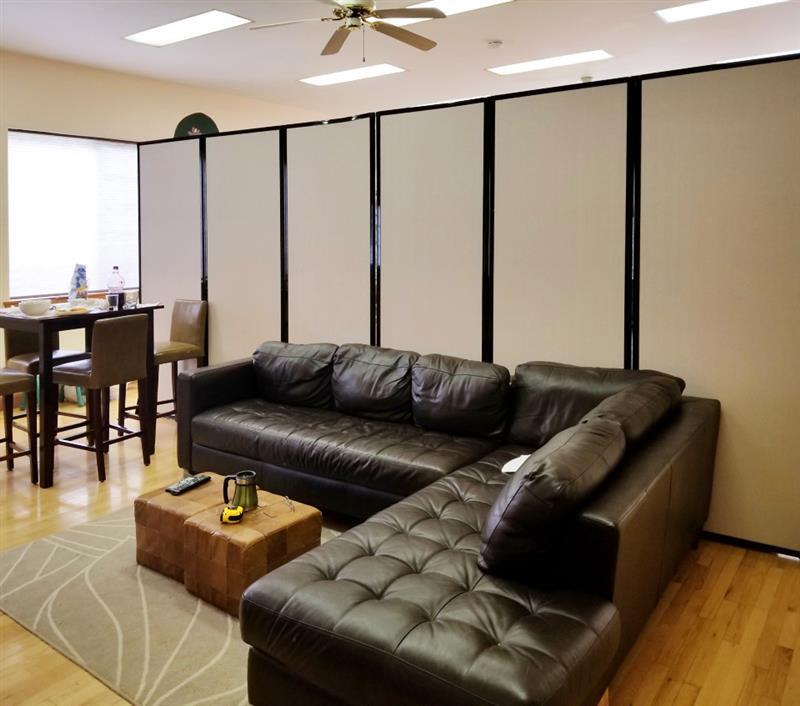
For instance, lounge seating can signal a space for informal collaboration, while long worktables support focused work or project meetings. High-top tables can also create areas for quick conversations or stand-up discussions. Shelving or storage units can also help define zones by acting as subtle boundaries, adding structure while keeping the space open.
4. Define Spaces with Flooring and Ceiling Cues
Visual design elements help define zones without adding physical barriers. Changes in flooring materials, textures, or patterns subtly indicate where one activity area ends and another begins. A lounge area might feature a rug that defines the seating space, while different carpet tiles could distinguish collaboration zones from walkways. Ceiling treatments like baffles and lighting can help define zones as well, with pendant lights over meeting tables or focused lighting in presentation areas subtly guiding how the space is used.
5. Leverage Visual Markers and Wayfinding
Visual markers can further reinforce these zones and make navigation more intuitive, even when layouts change. Color schemes, signage, and design accents help communicate how different areas are meant to be used. Collaboration zones might use brighter colors, while quiet work areas feature more neutral tones. Signage or wall graphics can also guide people toward meeting areas, event spaces, or service points.
6. Integrate Technology and Power Distribution
Flex space works best when people can work comfortably from anywhere within the environment. Ensuring power outlets, connectivity, and digital tools are distributed throughout the space prevents teams from clustering around a single resource and helps maintain flexibility.
Different zones may require different technologies to function effectively. Collaboration areas might incorporate mobile display screens or wireless presentation tools, while training spaces often benefit from larger displays, audio systems, or video conferencing equipment. Planning technology alongside the layout ensures each area can support the activities it’s designed for.
7. Divide Sound as Well as Space
Managing noise is essential in flex spaces where multiple activities may occur at the same time. Without proper acoustic planning, conversations, meetings, and presentations can easily overlap and create distractions that make it difficult for people to focus.
Incorporating acoustic solutions helps reduce this issue. Soft materials such as rugs, upholstered furniture, and curtains can absorb sound, while acoustic panels and sound-absorbing partitions help limit noise traveling between zones. These elements create quieter, more comfortable environments without requiring permanent walls.
Make Flex Space Work for You
Flex space plays an important role in modern workplace design. By allowing environments to adapt to changing needs, organizations can support collaboration, training, events, and focused work within the same footprint.
Dividing flex space effectively ensures the area remains functional rather than chaotic. With thoughtful planning, flexible partitions, intentional furniture layouts, and smart design cues, organizations can create spaces that are both adaptable and easy to use.
If you're looking to optimize your commercial office space, explore flexible partitioning solutions or consult with a space planning expert to create a more productive environment.